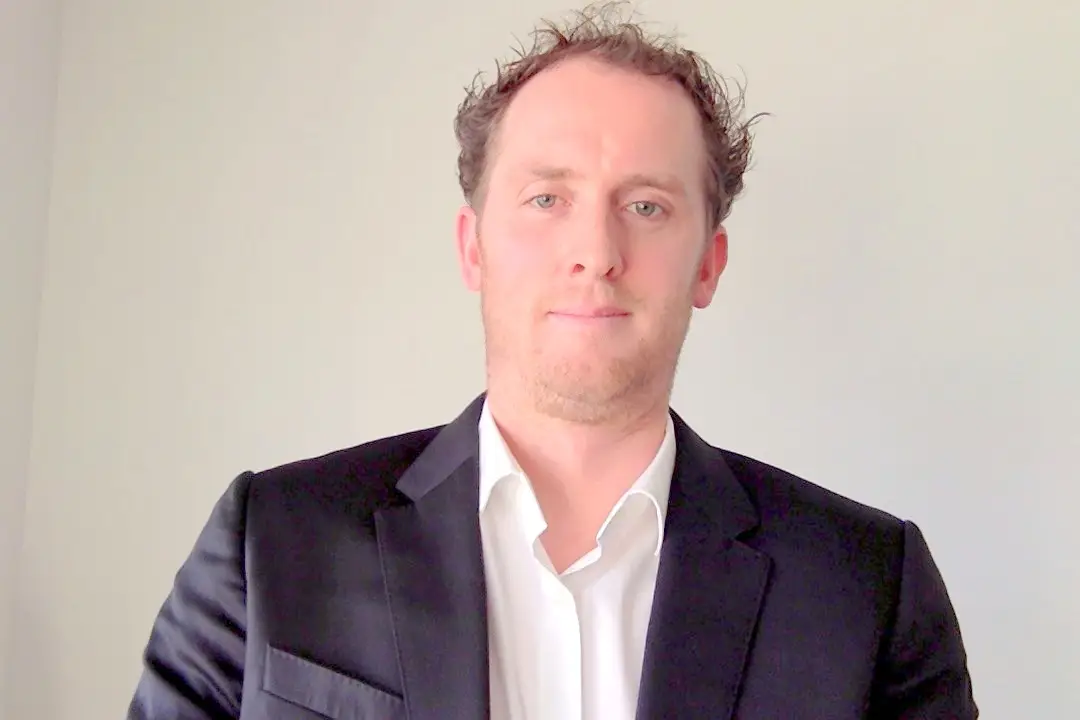
By David Callanan · Therapist Business Club Twenty-nine years in business advisory. Twenty in corporate consulting, and the last nine advising leading clinics and private practices across Ireland. Business mentor to Local Enterprise Offices nationwide.
Last updated: September 2026
Your enquiries dropped. You didn’t change anything. You’ve been checking your directory page views the way you check a wound, and somewhere in the back of your head there’s a question you probably haven’t said out loud.
Is this happening to everyone, or is it just me?
It’s happening to nearly everyone.
I work with private practices in Ireland and I hear the same story every week now. Therapists who’ve been full for years. Therapists with waiting lists who suddenly have gaps. Nothing went wrong with you. Three things changed in search during 2026, at roughly the same time, and together they took the floor out from under the way most therapists have been found for the last decade.
Nobody sent a memo.
Why counselling directory enquiries have stopped working
The directories still rank. Far fewer people scroll far enough to see them — and the listings themselves were always a crowded place to stand.
Directories rank well on Google because they’re large sites with thousands of pages. That hasn’t changed. What changed is what now sits above them: an AI-generated answer, appearing before any links at all.
So your listing hasn’t got worse. Fewer people are reaching the page it sits on.
Therapists across Ireland and the UK have been reporting the same thing through 2026. Psychology Today, Counselling Directory and the professional body listings all going quiet together, with nothing changed at the practitioner’s end.
What changed in Google search in 2026
Several core updates, a higher bar for health content, and thin pages losing ground.
Google ran a string of ranking updates during 2026, including three separate changes inside four weeks in the spring. Two details matter for a therapy practice.
Health content is judged more strictly. The largest of those updates hit hardest in what Google calls YMYL categories — Your Money or Your Life. Money. Law. Health. Therapy sits squarely inside it, which means you’re held to a higher standard than a florist.
Thin and templated pages were hit hardest. If your site is a homepage, an about page and a contact form, with a few careful paragraphs of general language about the therapeutic relationship, there’s very little there in Google’s current terms. Not badly written. Just not much of it, and not specific.
How much Psychology Today and Counselling Directory cost in Ireland
Roughly €239 to €285 a year each. The price hasn’t moved while the yield has collapsed.
| Listing | Monthly | Per year |
|---|---|---|
| Psychology Today (Ireland) | €19.95 | €239.40 |
| Counselling Directory (UK) | £24.50 | £245 on the annual plan |
Neither is a fortune on its own. Most practitioners carry two or three, which is where it starts to add up, and the subscription was never the real cost anyway. The real cost is what comes back.
Why you are invisible in 97% of directory searches
Rotation. A typical area search returns more than 200 therapists, and any one profile reaches the top five roughly one view in forty.
This is the part nobody explains at sign-up.
Psychology Today rotates its listings so that every profile gets a turn near the top. That sounds fair, and in one sense it is. Now look at what it means arithmetically.
A search in a typical area returns more than two hundred therapists. With rotation, an individual profile lands in the top five in about one view out of forty.
You’re absent from roughly 97 out of every 100 searches in your own area. That’s the design, not a fault in your profile.
If you’ve ever rewritten your profile wondering what was wrong with the wording, read that again. You could write the finest profile on the platform and still be missing from almost every search. The problem was never the words. It was the queue.
What a directory client actually costs now
Somewhere between five and ten times what it cost in 2020.
Therapists were reporting eight to fifteen enquiries a month from a directory listing around 2020, turning into two to five new clients. The same listings are now widely reported at one to three enquiries a month, and nought to one client.
Run that against the Irish price:
| Enquiries per month | Clients per year | Cost per client | |
|---|---|---|---|
| Around 2020 | 8–15 | roughly 30–50 | €4–€8 |
| 2026 | 1–3 | roughly 3–11 | €22–€80 |
The price didn’t move. The cost of acquiring a client went up somewhere between fivefold and tenfold.
A note on those figures, because it matters. They come from therapists reporting their own results, not from the platforms. No directory publishes its conversion data. Treat them as the shape of what’s happened rather than a measurement. The direction isn’t in doubt — you can read it in any therapist group this month. The precision is.
Who actually profits from therapist directories
The directory’s revenue depends on you renewing, not on you getting a client.
Counselling Directory is owned by Memiah Limited, registered in England and Wales. Memiah also owns Hypnotherapy Directory, Life Coach Directory, Nutritionist Resource and Therapy Directory. Five directories, the same model each time.
By their own published figure, they have over 24,000 professional members across those sites.
At the listed monthly rate, that’s in the region of £7 million a year in practitioner subscriptions. Their actual figure will be lower. Annual plans cost less, charities are free, tiers vary. The order of magnitude is the point.
On a directory, you’re the customer and the client is the product. The people searching for a therapist pay nothing. You pay. So the platform is built, rationally, to keep you subscribed rather than to get you booked.
Look at rotation again in that light. If the ten best profiles took all the enquiries, the other hundred and ninety would cancel. Rotation spreads enquiries thinly enough that almost everyone gets just enough to renew, and almost nobody gets enough to build a practice on.
There’s nothing underhand in this. It’s a legitimate business run by people who care about the sector. It’s simply worth knowing which side of the transaction you’re standing on, because nobody tells you at the point of signing up.
The fair argument on the other side
If a client comes to you at €70 and stays for eight sessions, that’s €560. One client a year from a €239 listing has paid for it twice over.
So the case against directories isn’t that they’re a rip-off. It’s narrower:
- The yield is falling and you can’t influence it. You can improve your profile. You can’t improve the platform’s traffic or its position in Google.
- You’re renting. The traffic belongs to the directory. If they change their layout, their pricing or their ranking, your enquiries change and you had no say.
- Everything you put in stays there. Two hours perfecting a directory profile builds the directory. The same two hours on a page you own keeps working for years.
Don’t cancel anything this week. If a listing still produces, keep it. Stop treating it as the plan.
How clients find a therapist now
Through two or three different routes before they book, and increasingly by describing their situation to an AI rather than typing keywords.
There’s no longer one dominant route. Analysis of the market puts ordinary Google search at roughly half of first contact, directory traffic at around a fifth and falling, and personal referral at roughly a fifth and also falling, with social media growing fastest among under-35s. Those figures are US-weighted and directional rather than exact.
The shape is the point. People use several routes before they book. A name from a friend, a Google search, a directory profile, a website, an Instagram account. No single channel is enough to be good at any more.
What every one of those routes is quietly asking is the same question:
Is it obvious, within a few seconds, who this person helps and what they help with?
If the answer is yes, you survive all of them. If it’s no, you fail all of them at once, which is exactly why the drop feels so sudden and so total.
Why ChatGPT cannot see your therapy website
Different AI systems read different sources, and most therapists have set up only one of the three.
This surprises people, so it’s worth stating plainly.
| When someone asks… | It mostly draws on… |
|---|---|
| ChatGPT | The Bing index, pages it can crawl directly, and large review and directory sites. Not your Google Business Profile. |
| Google’s AI answers | Google’s own index and your Google Business Profile. |
| Siri / Apple Intelligence | Apple Maps and its listing partners. |
Read the middle column again. If you’ve carefully set up a Google Business Profile and nothing else, you’re visible to one of those three.
What makes a therapy website unreadable to a machine
To recommend you, an AI assistant needs to state in a sentence who you help and where you are. Most therapy websites make that impossible, for four reasons:
- The page never says where you are. “Online and in person” isn’t a place. If the town isn’t written in plain words on the page, you can’t be recommended to somebody in that town.
- The page never says who you help. “I work with adults experiencing a range of difficulties” contains no information a machine can match to a person asking about post-natal exhaustion.
- The bio leads with training, not with the client. Four lines of qualifications before anything about the reader. A human skims past it. A machine has nothing to grab.
- There’s nothing underneath the homepage. One page can’t answer many different questions. Several pages, each answering one real question properly, can.
What to do about it
The fixes divide into two halves, and they aren’t the same kind of work.
The first half is plumbing. There’s a right answer, it’s the same right answer for every therapist in the country, it’s free, and you can do it yourself in an evening. Claim and complete your Google Business Profile. Set up Bing Places — almost nobody does, and it’s the single reason many therapists are invisible to ChatGPT. Make your name, address and phone number identical everywhere. Then ask an AI what it says about you, and find out where you actually stand.
The second half is not a checklist, and I’m not going to pretend otherwise. Writing a homepage that says who you help, choosing which three things to build pages around, being willing to be the wrong therapist for everybody else. That takes judgement, not instructions.
I’ve written the whole of it up, with time estimates on every step, as a full guide inside the Therapist Business Club — the plumbing checklist, what a good page actually does, what not to waste money on, and three checks you can run today.
It’s one of the resources members get alongside the templates, compliance pack, and monthly training — €39/month, cancel any time.